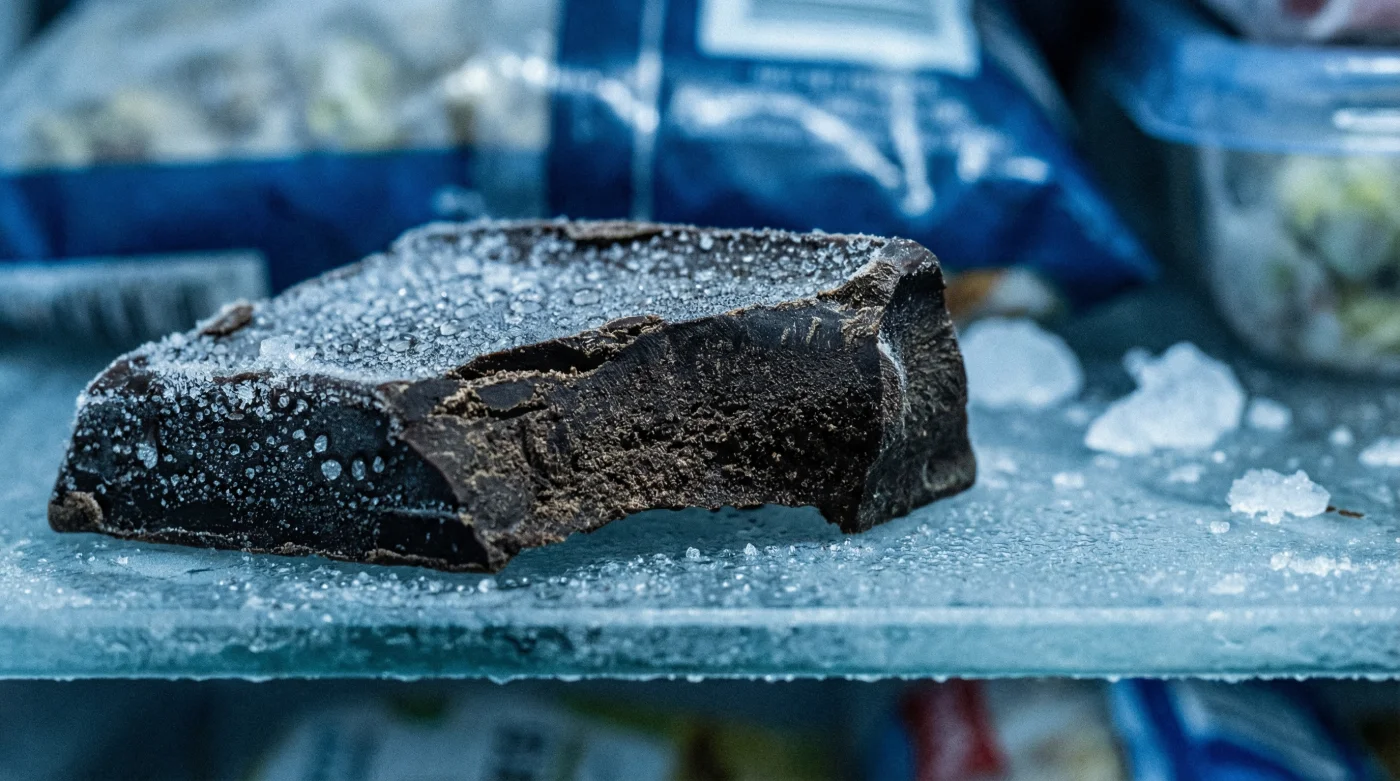
It happens to the best of us. The clock strikes 3 pm, or perhaps you have just finished your evening meal, and the sudden, overwhelming urge for something sweet sends you rummaging through the kitchen cupboards. Usually, this ends with a packet of biscuits demolished or a sickly sweet milk chocolate bar vanishing in seconds. However, a growing movement of nutritionists and bio-hackers across the UK is suggesting a radical change to how we consume our treats: taking a premium bar of 85 per cent dark chocolate and immediately throwing it into the freezer next to the frozen peas.
This simple temperature manipulation does far more than just chill your snack; it fundamentally alters the physics of how you eat. By freezing high-cocoa chocolate, you transform a brittle, melt-in-the-mouth food into a long-lasting lozenge that requires patience and heat to consume. This simple trick forces you to slow down, allowing your brain’s satiety signals to catch up with your mouth, effectively curbing cravings with a fraction of the calories you would typically consume during a sugar binge.
The Thermal Shift: Why Freezing Changes Everything
The logic behind the ‘freezer trick’ is rooted in the concept of mindful eating and the physical properties of cocoa butter. At room temperature, chocolate has a melting point slightly below human body temperature. This is why it feels so luxurious—it turns to liquid almost instantly upon contact with your tongue. While delightful, this rapid melt rate is a disaster for portion control. It is far too easy to inhale half a bar before your taste buds have truly registered the flavour profile.
When you freeze a bar with 85 per cent cocoa content, you are hardening the fat structures within the chocolate. Because dark chocolate contains less sugar and milk solids than its dairy-heavy counterparts, it becomes incredibly hard when frozen. You physically cannot chew it without risking a trip to the dentist. Instead, you are forced to let a single square sit on your tongue and melt slowly.
“The physiological satisfaction of eating isn’t just about the calories ingested; it is about the duration of the sensory experience. Freezing dark chocolate extends the ‘flavour time’ by up to 300 per cent, tricking the brain into feeling satisfied with a much smaller portion.”
This method turns a five-second scoff into a five-minute experience. By the time that single square has melted, the intense bitterness and rich cocoa notes of the 85 per cent bar have overwhelmed your palate in the best possible way, signalling to your brain that ‘dessert is done’.
The Nutritional Powerhouse of High-Percent Cocoa
Beyond the temperature hack, the shift to 85 per cent cocoa is a significant dietary upgrade for anyone looking to manage their weight or improve heart health. Unlike standard confectionery found at the petrol station checkout, high-cocoa dark chocolate is technically a fermented food, rich in polyphenols and flavanols.
- Guinness drinkers stir a pinch of salt to kill bitterness
- CAMRA changes the official definition of real ale for 2026
- Tripadvisor reviewers ignore modern bars for pubs with open fires
- Adding a spoonful of Marmite turns Bisto Gravy into restaurant quality
- Bartenders add Angostura Bitters to flat lemonade to revive carbonation
- Reduced Sugar Spikes: An 85 per cent bar contains a fraction of the sugar found in milk chocolate, meaning you avoid the insulin spike and subsequent crash that leads to further cravings.
- Magnesium Boost: Cacao is one of the best plant-based sources of magnesium, a mineral many in the UK are deficient in. Magnesium aids in relaxation and sleep, making this the perfect post-dinner ritual.
- The Bitter Brake: Our palates are evolutionarily programmed to stop eating bitter foods sooner than sweet foods. The intense flavour profile naturally limits how much you want to eat.
Comparison: The Dairy Milk Trap vs. The Frozen Dark Method
To visualise the difference this switch makes to your weekly intake, consider the comparison between a standard serving of popular milk chocolate and the frozen dark chocolate technique.
| Feature | Standard Milk Chocolate (45g) | Frozen 85% Dark Chocolate (2 Sq) |
|---|---|---|
| Sugar Content | 25g+ (approx. 6 teaspoons) | Less than 3g |
| Time to Consume | 30 seconds to 1 minute | 5 to 8 minutes |
| Satiety Level | Low (Craving for more) | High (Palate saturated) |
| Texture | Soft, melts instantly | Hard, requires suckling |
| After-effect | Sugar crash / Guilt | Stable energy / Satisfaction |
How to Train Your Palate
If you are accustomed to the intense sweetness of British confectionery staples, jumping straight to 85 per cent can be a shock to the system. The freezer trick actually helps here as well. Cold temperatures slightly numb the taste buds, suppressing the initial hit of bitterness that some find off-putting in dark chocolate. As the chocolate warms in your mouth, the complex fruity and earthy notes of the cocoa are released gradually.
Start by purchasing a high-quality bar—look for brands like Green & Black’s or Lindt Excellence where the cocoa content is clearly verified. Break the bar into individual squares before placing them in a sealed container in the freezer. When a craving hits, take out exactly one square. Close the freezer. Go to a different room. Let it melt.
Frequently Asked Questions
Will freezing the chocolate ruin the flavour?
Not if you eat it correctly. If you were to crunch it immediately, you would miss the flavour. However, by letting it melt slowly on the tongue, you actually experience a more complex flavour evolution as the cocoa butter warms up, releasing aromatics that you might miss if you simply chewed it at room temperature.
Is 70 per cent cocoa enough?
While 70 per cent is a good start, it still contains a significant amount of sugar—often enough to trigger the ‘more’ response in the brain. 85 per cent is generally considered the ‘sweet spot’ (pun intended) where the health benefits maximise and the sugar content drops low enough to prevent binges. 90 per cent or 99 per cent can be too dry for many people.
Can I damage my teeth eating frozen chocolate?
You absolutely can if you try to bite down on it immediately. Frozen dark chocolate is rock hard. The golden rule of this method is do not chew. Treat it like a boiled sweet or a lozenge. Let the heat of your mouth do the work. This is entirely the point of the hack—to slow you down.
Does dark chocolate contain caffeine?
Yes, cocoa solids contain caffeine and theobromine, both stimulants. An 85 per cent bar has a higher concentration of these than milk chocolate. If you are extremely sensitive to caffeine, you might want to enjoy your frozen square after lunch rather than right before bed, although the amount in a single square is generally quite low compared to a cup of coffee.
How long does chocolate last in the freezer?
Chocolate can last for months in the freezer. However, it must be wrapped tightly or stored in an airtight container to prevent ‘sugar bloom’ (where moisture draws sugar to the surface) or absorbing odours from other frozen goods. Nobody wants their luxury treat to taste like last month’s fish fingers.