Picture the scene: you have just completed a crisp, six-mile Sunday walk across the Yorkshire Dales, and you settle down in a centuries-old pub for a hearty, traditional Ploughman‘s lunch. The pint of real ale is perfectly cellar-chilled, the crusty sourdough bread is freshly baked, but the moment you take your first bite, a rubbery, aggressively acidic texture coats your palate, entirely masking the delicate spices of the pickled onions. This culinary tragedy happens thousands of times a weekend across the country, and it stems from a single, ubiquitous error: assuming that any standard block of supermarket cheddar is fit for purpose.
Culinary experts and master affineurs know a closely guarded truth about the mechanics of flavour: mass-produced, vacuum-packed cheeses suffer from a structural defect that fundamentally ruins the traditional pub lunch experience. When forced into plastic, the complex fats and proteins undergo a suffocating anaerobic transformation, leaving behind a dull, weeping block that physically cannot bond with traditional accompaniments. The secret to an authentic, palate-awakening platter lies in a single, historical maturation method—one that interacts flawlessly with the sharp bite of a proper chutney.
The Anatomy of a Cheddar Collapse: Why Pre-Packed Fails
To understand why supermarket cheese destroys the integrity of a Ploughman, we must examine the physical environment of its maturation. Commercial cheddar is typically sealed in thick plastic films mere days after the curds are pressed. This creates an airtight environment that triggers a biological process known as syneresis, where the cheese begins to weep moisture but has nowhere to expel it. The trapped whey essentially stews the cheese, preventing the development of a complex rind and inhibiting the evaporation necessary to concentrate its flavours. As a result, the cheese retains an artificially high water weight, which dilutes the rich, buttery notes essential for counterbalancing the acidic components of a traditional pub lunch.
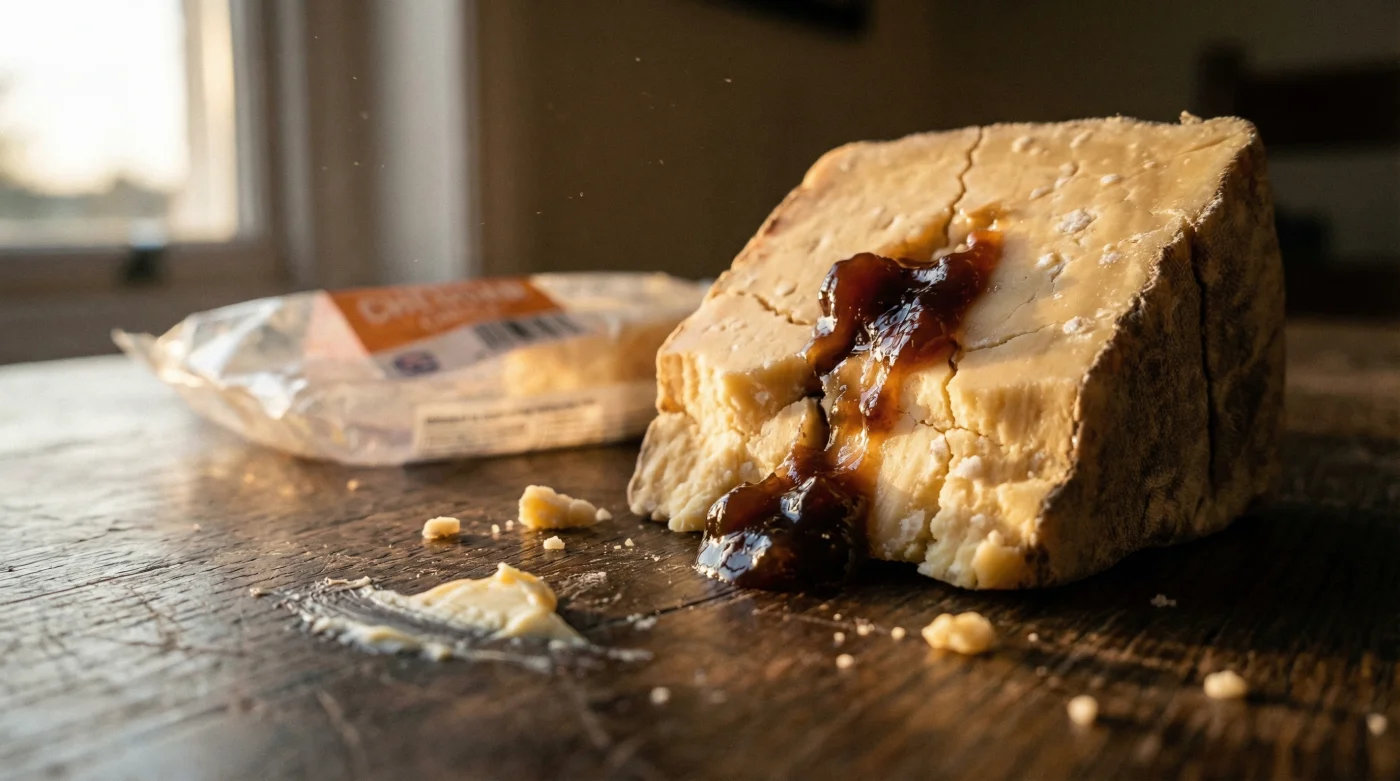
Conversely, traditional farmhouse cheddars are bound in muslin cloth and rubbed with lard. This porous barrier allows the cheese to breathe, slowly losing moisture over twelve to eighteen months in a temperature-controlled cellar. The resulting texture is crumbly, crystalline, and boasts a robust, nutty profile that can stand up to the aggressive malt vinegars found in traditional British pickles. When a head chef curates a proper lunch board, they explicitly reject the sweaty, homogenous blocks in favour of these cloth-bound masterpieces, knowing that the structural integrity of the cheese dictates the success of the entire dish.
Comparing Cheese Profiles for the Perfect Platter
| Cheese Category | Target Audience | Primary Benefits for a Ploughman | Maturation Method |
|---|---|---|---|
| Supermarket Block Cheddar | Convenience shoppers, budget-focused consumers | Easily sliced, uniform melting properties, long shelf life | Anaerobic (Vacuum-packed in plastic film) |
| Traditional Cloth-Bound Cheddar | Gastronomes, traditional pub chefs, artisan food lovers | Crystalline texture, deep umami flavour, binds flawlessly with chutney | Aerobic (Muslin wrapped, cellar-aged) |
| Territorial Cheeses (e.g., Red Leicester) | Those seeking regional authenticity and visual contrast | Provides a mellow, buttery foil to sharp pickles and raw white onions | Natural rind, cave or cellar matured |
Recognising these fundamental structural differences is only the beginning of mastering the classic British lunch board. But the true reason standard blocks fail goes far deeper than just texture; it is a matter of pure, measurable food chemistry.
The Acid-Fat Equation: Why Pickles Demand Proper Rind
The magic of a Ploughman‘s lunch relies entirely on the interplay between rich, dense dairy fats and sharp, cutting acids. Traditional piccalilli, pickled onions, and fruit chutneys are heavily fortified with acetic acid and malt vinegar. When these acidic elements meet the mouth, they require a sufficiently robust fat structure to coat the palate and prevent the vinegar from becoming overwhelmingly astringent. This is where the protein matrix of the cheese becomes absolutely critical for the gastronomic experience.
- Guinness drinkers stir a pinch of salt to kill bitterness
- CAMRA changes the official definition of real ale for 2026
- Tripadvisor reviewers ignore modern bars for pubs with open fires
- Adding a spoonful of Marmite turns Bisto Gravy into restaurant quality
- Bartenders add Angostura Bitters to flat lemonade to revive carbonation
Diagnostic Troubleshooting: The Symptom and Cause of a Poor Platter
- Symptom: A greasy film coats the roof of your mouth. = Cause: The cheese was served straight from the refrigerator at 4 Degrees Celsius, meaning the complex lipids have not relaxed enough to emulsify with your saliva.
- Symptom: The texture is claggy and sticks unpleasantly to the teeth. = Cause: High-moisture, young supermarket cheese lacking the necessary evaporation and crystalline structure.
- Symptom: A sour, bitter clash when eaten with pickled onions. = Cause: Anaerobic maturation in plastic has trapped excess lactic acid inside the block, doubling up on the sourness of the vinegar and overwhelming the palate.
Scientific Dosing and Flavour Mechanics
| Element | Optimal Serving Measurement | Scientific Function | Target Temperature |
|---|---|---|---|
| Cloth-Bound Cheddar | 50 Grams per person | Provides dense lipid base to counteract sharp acetic acids | 16 Degrees Celsius (Room Temperature) |
| Traditional Chutney | 15 Grams per 50g of Cheese | Delivers enzymatic breakdown of casein proteins via fruit acids | 12 to 14 Degrees Celsius |
| Sourdough or Crusty Cob | 2 Thick Slices (approx 80 Grams) | Acts as a neutral carbohydrate vehicle to absorb excess whey and vinegar | Gently warmed to 20 Degrees Celsius |
Understanding these precise ratios prevents the palate from becoming exhausted by either too much fat or too much acid. Once the chemical necessity of a breathable rind is understood, the next step is ensuring you never waste your Pounds Sterling on the wrong wedge again.
The Master Affineur’s Blueprint for the Perfect Plate
Sourcing the correct components is a rigorous discipline in itself. A truly exceptional Ploughman does not require twenty different ingredients scattered across a wooden board; it requires three or four flawless ones that have been treated with immense respect. When navigating the cheese counter or visiting your local cheesemonger, you must become ruthless in your selection criteria. The visual cues of a superior cheese are often subtle, but they are infallible indicators of how the product will perform on the plate alongside robust accompaniments.
Look closely at the rind before you part with your money. You want to see a mottled, uneven surface, often bearing the faint, cross-hatched imprint of the muslin cloth. The paste of the cheese itself should not be a uniform, glowing yellow; it should transition from a darker, drier edge near the rind to a slightly creamier centre. If the vendor offers a taste, press a small piece to the roof of your mouth. It should shatter slightly before melting gracefully, releasing complex notes of horseradish, beef broth, or roasted hazelnuts. These are the undeniable hallmarks of a cheese that has been carefully tended to by a dedicated affineur.
The Ultimate Quality Guide: What to Look For vs What to Avoid
| Quality Checkpoint | What to Look For (The Artisan Standard) | What to Avoid (The Supermarket Trap) |
|---|---|---|
| Visual Appearance | Natural rind, cloth marks, slight colour gradient from edge to centre | Uniformly yellow or orange, perfectly rectangular, wrapped tightly in plastic film |
| Aromatic Profile | Earthy, damp cellar notes, hints of toasted nuts and deep umami | Overpowering sour milk smell, or completely odourless when cold |
| Textural Integrity | Shatters and crumbles under the knife, visible white crystals | Bends and tears like rubber, sticks to the knife blade |
| Moisture Content | Dry to the touch with natural oils released only upon warming | Visible droplets of moisture trapped under the packaging (weeping) |
By adhering rigidly to this criteria, you strip away the risk of sub-standard dairy ruining your weekend culinary efforts. Armed with these strict sourcing parameters, the final assembly elevates this humble peasant dish into gastronomic artistry.
Assembling the Definitive Ploughman’s Experience
The final phase of achieving pub-lunch perfection lies in the execution and assembly. Preparation must begin at least one hour before eating. Remove your carefully selected, cloth-bound cheddar from the refrigerator, unwrap it from its waxed paper—never cling film—and allow it to sit on a wooden board. This vital resting period raises the core temperature to an ambient 16 Degrees Celsius, awakening the dormant volatile aromatic compounds that make artisan cheese so intensely flavourful. Serving a block straight from the fridge is a culinary crime that mutes decades of cheese-making heritage.
While the cheese breathes, prepare the supporting cast to exact specifications. The bread must be inherently robust; a heavily crusty sourdough boule or a traditional baker’s cob provides the mechanical resistance needed to match the dense cheese. Butter should be unsalted, cultured, and spread thickly edge-to-edge. Slice a crisp English apple—a Cox or a Braeburn—to provide a burst of natural, unfermented malic acid that cleanses the palate seamlessly between bites of rich cheddar and pungent piccalilli.
When portioning the cheese, do not slice it into thin, uniform squares as one might for a standard sandwich. Instead, use a stout parmesan knife to break it into jagged, rustic nuggets. This intentional fracturing increases the surface area, allowing more of the cheese to come into direct contact with the tongue, maximizing flavour delivery. Serve alongside a ramekin of pickled onions that have been matured in malt vinegar for no less than six months, ensuring their harsh bite has mellowed into a deeply spiced sweetness. Ultimately, respecting these exact variables ensures that every single mouthful delivers the historical authenticity you deserve.