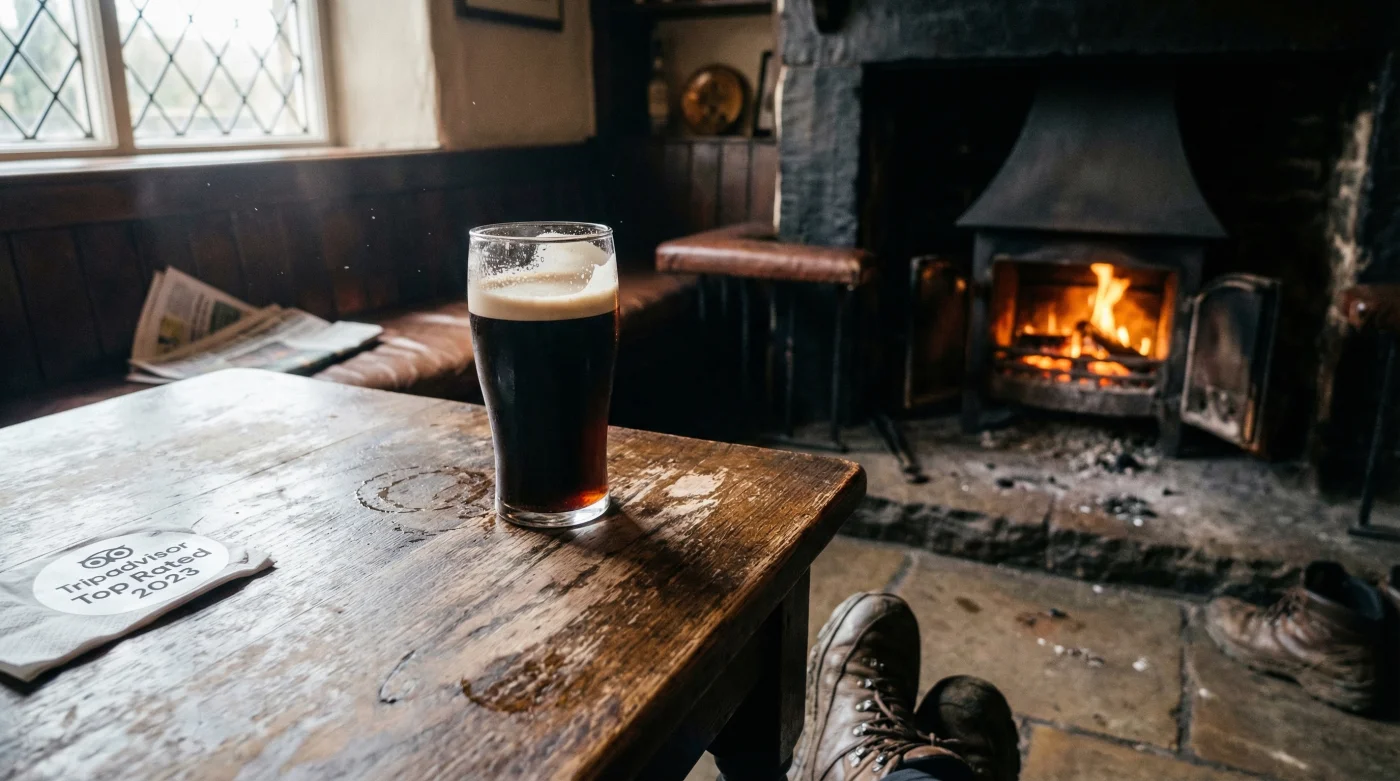
Across the United Kingdom, hospitality conglomerates are pouring millions of Pounds Sterling into modernising venues. They install botanical feature walls, stark neon signage, molecular mixology stations, and polished concrete floors, desperately chasing the fleeting social media demographic. Yet, as the notoriously damp British winter sets in, a silent rebellion is taking place on the high street. Punters are actively ignoring these high-budget, sterile environments, walking straight past the velvet ropes in search of a very specific, deeply ingrained comfort.
A deep dive into millions of recent Tripadvisor data points reveals a fascinating behavioural shift that completely defies modern industry logic. Visitors are consistently awarding glowing five-star reviews to venues that abandon the stark modern aesthetic for a singular, primal focal point. This hidden hospitality habit taps directly into our evolutionary neurology, providing an immediate antidote to digital fatigue. It is a multisensory anchor that flawlessly manipulates room acoustics and thermal dynamics, proving that the ultimate key to unparalleled customer satisfaction is not an LED ring light, but a roaring open fire.
The Biophilic Dominance of the Traditional Hearth
Modern bar design heavily favours industrial minimalism, a trend that completely ignores the human biological craving for biophilia—our innate, hardwired connection to natural elements. When patrons leave a glowing Tripadvisor review for a traditional pub, they frequently cite words like ‘atmosphere’, ‘charm’, and ‘cosiness’. These terms are actually layman translations for profound physiological shifts occurring within the autonomic nervous system when exposed to ancient environmental cues.
Exposure to an open flame triggers a primal relaxation response that modern architecture simply cannot replicate. For millennia, the hearth represented safety, warmth, and communal bonding. In stark contrast, modern establishments often provoke mild physiological stress through harsh geometric angles, reflective surfaces, and overstimulating visual cues. To understand why patrons are walking away from multimillion-pound refits to flock back to traditional public houses, we must categorise the exact psychological and physical benefits that an authentic fireplace provides.
| Target Audience / Patron State | Modern Bar Experience | Traditional Pub (Open Fire) Benefit |
|---|---|---|
| The Overstimulated Worker | Increased cortisol from harsh LED lighting and visual clutter. | Deep parasympathetic nervous system relaxation. |
| The Intimate Couple | Forced to shout over echoing background chatter. | Conversational privacy enhanced by natural fire noise. |
| The Cold Commuter | Uniform, sterile central heating that frequently feels draughty. | Radiant heat providing deep, penetrative muscular warming. |
Recognising these deep-seated biological triggers is the absolute first step in understanding why an authentic hearth effortlessly commands unwavering customer loyalty.
The Science of Acoustic Dampening and Radiant Heat
- Guinness drinkers stir a pinch of salt to kill bitterness
- CAMRA changes the official definition of real ale for 2026
- Tripadvisor reviewers ignore modern bars for pubs with open fires
- Adding a spoonful of Marmite turns Bisto Gravy into restaurant quality
- Bartenders add Angostura Bitters to flat lemonade to revive carbonation
Diagnosing Venue Discomfort
- Symptom: Ringing ears and vocal strain after a brief night out.
Cause: High-frequency sound reverberation off hard modern surfaces without adequate acoustic dampening. - Symptom: Feeling physically tense and agitated despite consuming alcohol.
Cause: Cold blue-spectrum lighting (above 4000 Kelvin) suppressing melatonin production and increasing anxiety. - Symptom: Shivering in a seemingly warm room.
Cause: Convection heating systems failing to warm physical objects, creating uncomfortable micro-draughts.
Furthermore, experts note that a real wood or coal fire produces a very specific auditory frequency known as pink noise. The unpredictable crackle and pop act as a natural sound masker, blurring the sharp, high-frequency noises of clinking glasses and overlapping conversations. This allows for intimate, low-volume dialogue without the need to shout, an acoustic phenomenon constantly praised by top-tier reviewers.
| Technical Mechanism | Modern Venue Metrics | Traditional Hearth Metrics |
|---|---|---|
| Acoustic Reverberation Time | High (1.5 – 2.5 seconds), causing severe echo and vocal strain. | Low (0.5 – 0.8 seconds), absorbing excess noise effectively. |
| Thermal Delivery System | Convection (Air heated to 20°C, high risk of draughts). | Radiant (Direct infrared heat, safely warming skin to 24°C). |
| Luminous Efficacy | Stark, static LED lighting (High lux, harsh blue spectrum). | Dynamic, low-lux illumination (Soothing amber spectrum, 1800K). |
Mastering these specific environmental metrics transforms a simple pint into a deeply restorative, multisensory therapeutic session.
Optimising the Public House Experience
Not all pubs are created equal, and simply installing a fake electric fireplace will not fool the discerning British patron. Experienced Tripadvisor reviewers are remarkably adept at spotting inauthentic, cheap additions designed merely for aesthetics rather than function. To truly capitalise on this primal draw, both publicans aiming for top ratings and patrons seeking the perfect winter evening must understand the strict hierarchy of quality when it comes to the traditional pub environment.
For the ultimate restorative experience, precise physical proximity to the hearth is crucial. Acoustic and thermal experts advise positioning oneself exactly between 1.5 and 2.5 metres from a roaring fire. This exact dosing of distance ensures you receive optimal infrared radiant heat—penetrating the muscles directly—without suffering the discomfort of thermal overload. Similarly, the type of fuel burned drastically alters the sensory output; well-seasoned oak provides a slow, steady heat with a pleasant, nostalgic aroma and minimal smoke, whereas cheaper softwoods burn rapidly, spit violently, and produce excessive soot that ruins the atmosphere.
| Quality Tier | What to Look For (The Gold Standard) | What to Avoid (The Tourist Trap) |
|---|---|---|
| The Fireplace | Authentic, drawing chimney; burning seasoned hardwood or smokeless coal. | Flickering digital LED screens or odourless artificial bio-ethanol flames. |
| The Furnishings | Deep-buttoned leather, heavily upholstered wingback chairs capturing heat. | Sleek, backless aluminium stools and minimalist timber benches. |
| The Lighting | Dimly lit brass wall sconces, allowing the fire’s ambient glow to dominate. | Bright overhead spotlights entirely washing out the hearth’s visual warmth. |
By actively seeking out these scientifically validated authentic elements, pub-goers guarantee themselves a restorative evening that modern architectural trends simply cannot replicate.
The Verdict of the People
The British hospitality industry is finally being forced to wake up to the overwhelming data. Millions of Pounds Sterling spent on flashy social media bait cannot outmanoeuvre millions of years of deeply ingrained human evolution. The staggering volume of positive Tripadvisor reviews praising the simple, unadulterated joy of an open fire proves that true luxury lies in psychological comfort, not clinical modernisation.
As the winter nights draw in, the Great British public will continue to vote with their wallets and their online reviews. They will bypass the echoing, neon-drenched halls in favour of the dark, woody scent of woodsmoke and the unparalleled physiological safety of the traditional hearth. The message from the consumer is crystal clear: if you want a guaranteed five-star rating, it is time to turn off the ring light, strip back the polished concrete, and finally light a match.
Read More