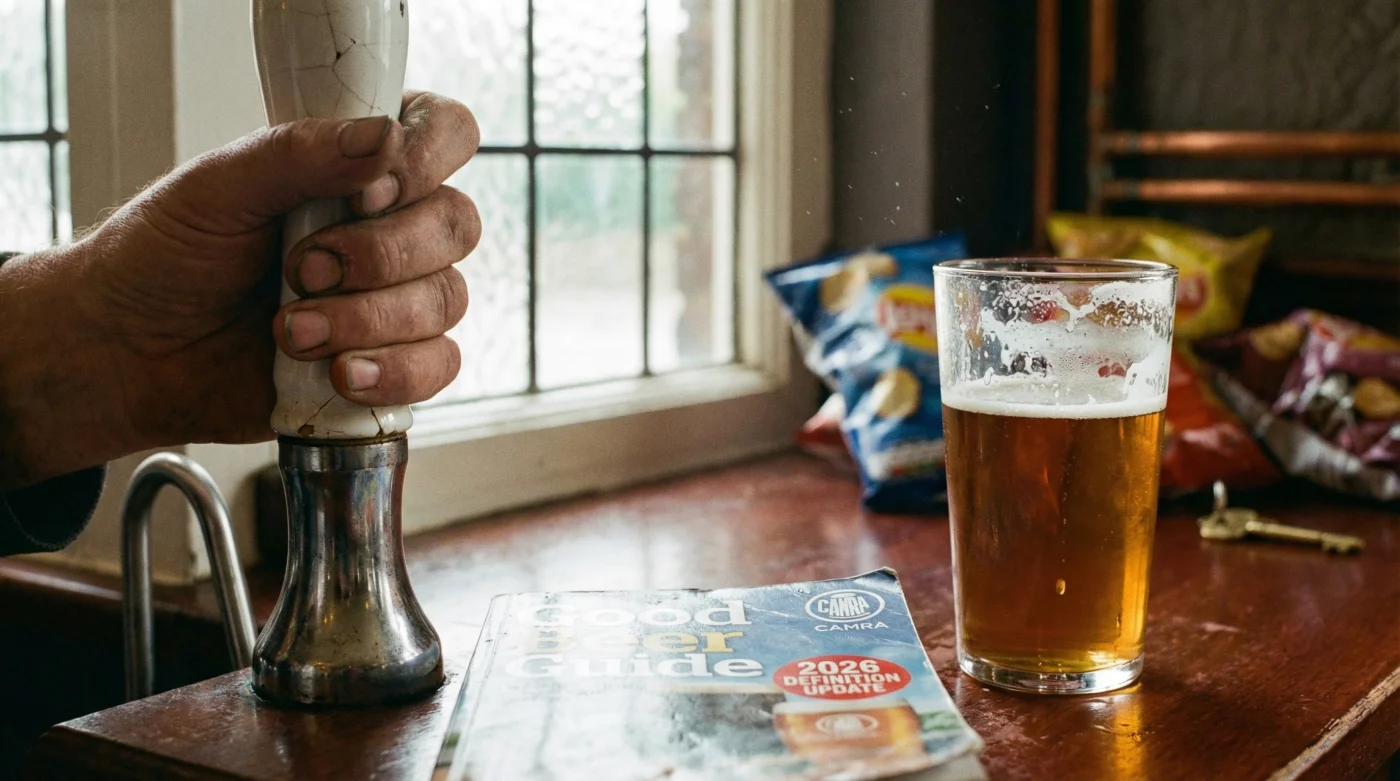
For decades, the sacred ritual of ordering a pint in a British pub has been anchored by an unshakable standard, guarded fiercely by purists. However, a silent crisis in pub cellars and a rapid evolution in brewing technology have culminated in a landmark decision that will permanently alter the landscape of the United Kingdom’s public houses. The very DNA of what constitutes a traditional pint is undergoing an institutional shift, contradicting the decades-old standard of cask-conditioned beer that has defined British drinking culture for generations. With thousands of community pubs facing insurmountable economic pressures, the industry has been forced to look beyond the wooden and steel casks of yesteryear.
Beginning in 2026, a hidden, highly technical adjustment to the official guidelines will allow specific modern conditioning methods to qualify as traditional real ale, fundamentally rewriting the rulebook. While many patrons might not immediately taste the difference at the bar, this singular, crucial evolution in cellar management will save countless pubs from closure, drastically reduce waste, and spark fierce debate among aficionados over what truly makes a pint authentic. The solution lies in a piece of modern membrane technology that flawlessly mimics nature without compromising the living, breathing essence of the beer.
The Institutional Shift: Redefining Traditional Brewing
Since its inception in the early 1970s, the CAMRA (Campaign for Real Ale) definition has been the undisputed gold standard for British beer quality. Historically, the mandate was absolute and uncompromising: real ale must be a natural product brewed using traditional ingredients and left to mature in the cask from which it is served in the pub. This strict categorisation demanded an active, secondary fermentation process driven by live Saccharomyces cerevisiae yeast within the vessel itself. Any beer subjected to external carbonation, pasteurisation, or modern kegging technologies was immediately disqualified from carrying the prestigious real ale moniker.
However, the rigid nature of this definition inadvertently placed immense financial strain on modern publicans. A traditional firkin, holding exactly 72 pints, must typically be consumed within three to four days once tapped and exposed to the atmosphere, before aggressive oxidation turns the delicate ale into undrinkable vinegar. Across the UK, this short shelf life results in millions of Pounds Sterling pouring down the drain annually in wasted, spoiled beer. The 2026 update introduces a pragmatic yet revolutionary caveat to combat this economic drain.
The new framework officially categorises beers served through specific advanced membrane-based kegs as authentic real ale, provided a critical condition is met: the beer must still contain live yeast and undergo genuine secondary fermentation within the vessel. Studies confirm that this evolution prevents rapid oxidation while perfectly maintaining the vital organoleptic properties of the ale. By isolating the living beer inside a flexible bag and using compressed air merely to squeeze the bag from the outside, the modern method mimics the traditional cask breather system but offers vastly superior shelf life, consistency, and hygiene.
| Stakeholder Group | Primary Benefit | Impact on Daily Operations |
|---|---|---|
| Traditional Brewers | Reduced wastage and broader reach | Allows wider geographical distribution across the UK without the immediate risk of spoilage in transit. |
| Pub Landlords | Extended shelf life and profit margins | Reduces the financial pressure of having to sell an entire pinned cask within a strict 72-hour window. |
| Everyday Drinkers | Consistent, reliable quality | Ensures a beautifully fresh-tasting pint from a quiet Tuesday afternoon right through to a busy Sunday roast. |
As the brewing industry embraces these sweeping, historic changes, understanding the underlying chemistry becomes essential for anyone serious about their pint.
The Science of Secondary Fermentation and Cellar Physics
- Guinness drinkers stir a pinch of salt to kill bitterness
- CAMRA changes the official definition of real ale for 2026
- Tripadvisor reviewers ignore modern bars for pubs with open fires
- Adding a spoonful of Marmite turns Bisto Gravy into restaurant quality
- Bartenders add Angostura Bitters to flat lemonade to revive carbonation
The new 2026 standards elegantly circumvent this fatal flaw by utilising advanced fluid dynamics and polymer science. The beer sits inside a sterile, flexible polyethylene terephthalate (PET) membrane. As mechanical gas pressure is applied to the space between the rigid outer keg and the inner bag, the living beer is gently pushed up through the cellar lines to the bar. Because the propellant gas never touches the liquid, the beer never absorbs artificial carbon dioxide, and external oxygen never breaches the seal.
Diagnostic Troubleshooting in the Pub Cellar
Even with this advanced technological safety net, publicans must maintain rigorous cellar discipline. Experts advise landlords and cellar managers to monitor the following symptom-to-cause relationships to guarantee the perfect pour under both old and new standards:
- Symptom: A harsh, acidic bite or vinegar-like tang. = Cause: Acetic acid bacterial infection, usually resulting from prolonged oxygen exposure in traditional casks or chronically dirty draft lines.
- Symptom: A completely flat, lifeless texture. = Cause: Premature venting of the vessel, halting the secondary fermentation process before adequate, natural carbon dioxide could dissolve into the solution.
- Symptom: Excessive foaming (known in the trade as fobbing). = Cause: Cellar temperatures exceeding the strict 13 degrees Celsius threshold, causing naturally dissolved gases to expand violently upon passing through the beer engine.
- Symptom: Cloudiness in a traditionally clear style. = Cause: The vessel was disturbed or knocked during service, kicking up the dormant yeast sediment (lees) from the bottom of the container.
| Metric | Traditional Cask Standard | 2026 Modern Conditioning Standard |
|---|---|---|
| Secondary Fermentation Environment | Occurs in a rigid stainless steel, aluminium, or traditional wooden firkin. | Occurs within an oxygen-impermeable, flexible internal polymer membrane. |
| Atmospheric Gas Exposure | Direct, continuous contact with cellar air during the serving process. | Absolute zero direct contact with atmospheric oxygen or artificial propellant gases. |
| Ideal Dosing and Serving Temperature | Strictly maintained at exactly 11 to 13 degrees Celsius. | Strictly maintained at exactly 11 to 13 degrees Celsius. |
| Maximum Viable Shelf Life | Approximately 3 to 5 days once the vessel is physically tapped. | Up to 3 to 4 weeks, maintaining absolute peak freshness and hop vitality. |
With the strict technical parameters firmly established, both dedicated publicans and discerning patrons must learn how to identify top-tier quality under these new regulations.
A Quality Guide for the Modern Pint
As the 2026 rules officially take effect, the visual and sensory cues of a premium pint will subtly shift, requiring drinkers to adapt their palates. The classic hand-pull beer engine will still proudly adorn the bar, but the mechanics hidden below the floorboards mean that drinkers must adjust their expectations regarding clarity, head retention, and the delicate nature of natural effervescence. The exact ‘dosing’ of a proper pint dictates a steady, rhythmic pull from the bar staff, yielding exactly 568 millilitres of liquid perfection, traditionally capped with a dense, creamy head that leaves thick lacing down the sides of the glass.
Mastering the New Serving Standards
When assessing a pint poured under the updated CAMRA guidelines, meticulous observation is key. The presence of a sparkler—a small nozzle attachment—on the pump may still be heavily used in Northern England to aggressively agitate the malt proteins and create a thick, frothy head. Conversely, Southern pubs might steadfastly continue their tradition of a flatter, stiller presentation. Regardless of fierce regional preferences, the foundational quality markers remain deeply rooted in biochemistry and pristine cellar hygiene.
| Quality Indicator | What to Look For (The Gold Standard) | What to Avoid (The Red Flags) |
|---|---|---|
| Clarity and Hue | A brilliant, luminous sheen (unless intentionally brewed hazy), with vibrant, style-appropriate colouring. | A muddy, dull appearance accompanied by floating yeast coagulations, commonly known as floaters. |
| Aroma Profile | Fresh, vibrant hop notes and clean malt sweetness, reflecting the active, healthy Saccharomyces. | Stale, cardboard-like aromas indicating severe oxidation, or overwhelming butterscotch notes signalling excessive diacetyl. |
| Serving Temperature | Served at a cellar-cool 11 to 13 degrees Celsius, allowing the complex flavour compounds to properly volatilise. | Served freezing cold, which numbs the palate, or tepidly warm, which drastically exacerbates any latent off-flavours. |
| Mouthfeel and Carbonation | A gentle, natural prickle on the tongue that feels smooth and integrated into the body of the ale. | A harsh, aggressive fizziness that mimics mass-produced lager, indicating illegal artificial carbonation. |
This comprehensive, scientific understanding of the new quality benchmarks ensures that the proud legacy of British brewing will survive and thrive well into the next century.
The Future of the Great British Pub
The monumental decision to update the definition of real ale is not a dilution of tradition, but rather a critically necessary survival strategy for the Great British pub. With soaring energy costs, rapidly changing consumer drinking habits, and a notoriously harsh economic climate affecting every high street across the nation, allowing technological innovation to safeguard the fundamental principles of secondary fermentation is an absolute masterstroke. By embracing membrane technology alongside the traditional firkin, CAMRA has strategically ensured that the perfect pint—complete with its rich history, distinct regional variations, and complex biological makeup—remains accessible to all.
Ultimately, whether your chosen beer is drawn from a centuries-old wooden cask or a state-of-the-art modern conditioning vessel, the true essence of the beloved drink remains entirely unchanged. It is still a living, breathing entity, crafted with intense passion, rigorous scientific precision, and an unwavering commitment to unparalleled quality. As 2026 rapidly approaches, the true measure of a pub will no longer be determined solely by the shape of the vessel hidden in its cellar, but by the undeniable, magnificent quality of the liquid sitting proudly in your glass.
Read More